




WordPress is one of the most popular content management systems used today. However, with its popularity comes the challenge of ensuring that your website is performing optimally. One common issue that many WordPress website owners face is a slow website. A slow website can affect your user experience, search engine ranking, and conversion rates. In this article, we will discuss some ways to fix a slow WordPress website.
- Choose a Good Hosting Provider
The hosting provider you choose can affect the speed of your website. Ensure you choose a hosting provider that offers a good uptime guarantee, fast server speed, and has data centers located near your target audience. Also, consider the server type you use, as using a dedicated server or virtual private server (VPS) can improve your website’s performance compared to shared hosting.
- Use a Lightweight Theme
The theme you use can affect the speed of your website. Choose a lightweight theme that is optimized for speed, as some themes come with lots of features that you may not need, which can slow down your website. Also, avoid using free themes, as they may contain malicious code that can affect your website’s performance.
- Optimize Images
Images are an important part of any website, but they can also slow down your website if not optimized. Compress images using tools like Photoshop or use image optimization plugins like Smush, Imagify, or ShortPixel. Also, ensure that you choose the right file type for your images, as using JPEGs for photographs and PNGs for graphics can improve your website’s performance.
- Use a Content Delivery Network (CDN)
A CDN can improve the speed of your website by delivering content from servers located close to your target audience. This reduces the distance that data has to travel and improves the loading speed of your website. Some popular CDN services include Cloudflare, MaxCDN, and KeyCDN.
- Enable Caching
Caching can improve your website’s performance by storing frequently used data in memory or on the user’s device, reducing the amount of data that needs to be fetched from the server. You can use caching plugins like W3 Total Cache, WP Super Cache, or WP Rocket to enable caching on your website.
- Remove Unnecessary Plugins
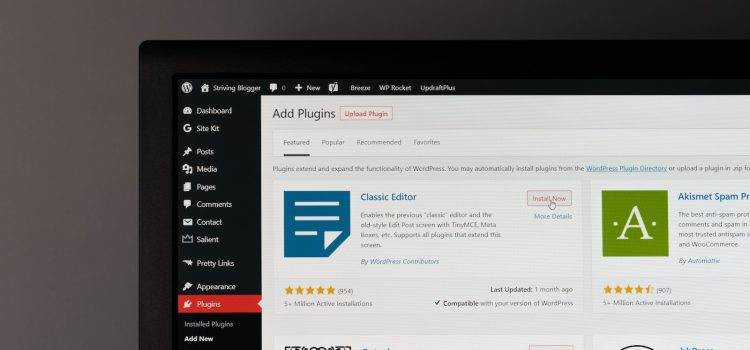
Plugins are a great way to add functionality to your website, but using too many plugins can slow down your website. Remove unnecessary plugins, and only use plugins that you need. Also, ensure that the plugins you use are updated regularly, as outdated plugins can affect your website’s performance.
- Optimize Your Database
Your website’s database stores all the data used on your website. Optimizing your database can improve the speed of your website by removing unnecessary data, optimizing tables, and reducing the size of your database. You can use plugins like WP-Optimize or WP Sweep to optimize your database.
- Use Lazy Loading
Lazy loading is a technique used to delay the loading of non-critical resources like images and videos until they are needed. This reduces the amount of data that needs to be loaded initially, improving your website’s performance. You can use plugins like Lazy Load or WP YouTube Lyte to implement lazy loading on your website.
A slow WordPress website can affect your user experience, search engine ranking, and conversion rates. By choosing a good hosting provider, using a lightweight theme, optimizing images, using a CDN, enabling caching, removing unnecessary plugins, optimizing your database, and using lazy loading, you can improve your website’s performance and ensure that your website loads fast.